Thailand's 20,000 Baht Rule: Proof of Funds at Immigration (2026)
Do you really need to carry 20,000 baht in cash to enter Thailand? The rule is old, and the Tourism Authority of Thailand restated it in July 2026. Here's what the rule actually says, how likely you are to be asked, what counts as proof, and how to prepare without carrying more cash than you're comfortable with.
Verified: October 28, 2026
Make the desk interaction boring
What the rule says
Visitors entering under the visa exemption must be able to show adequate funds of 20,000 baht per person or 40,000 baht per family. Some categories, such as the transit visa and Visa on Arrival, have lower thresholds of 10,000/20,000 baht. This isn't a fee — nobody takes the money — it's evidence you can support yourself during the stay.
An old rule, recently restated
The requirement comes from a 1980 Ministry of Interior announcement, with the amounts updated in 2000. On 6 July 2026 the Tourism Authority of Thailand publicly reminded travelers to be ready to show funds, and said that the reminder does not introduce a new measure. Treat the rule as live.
How likely is a check?
Most tourists are still never asked. Checks are discretionary and concentrate on travelers referred to secondary inspection: one-way tickets, frequent visa-exempt entries, very long stays, vague accommodation answers, or a TDAC that doesn't match the trip. A first-time two-week holidaymaker with a return ticket is a rare target — but "rare" isn't "never".
What counts as proof
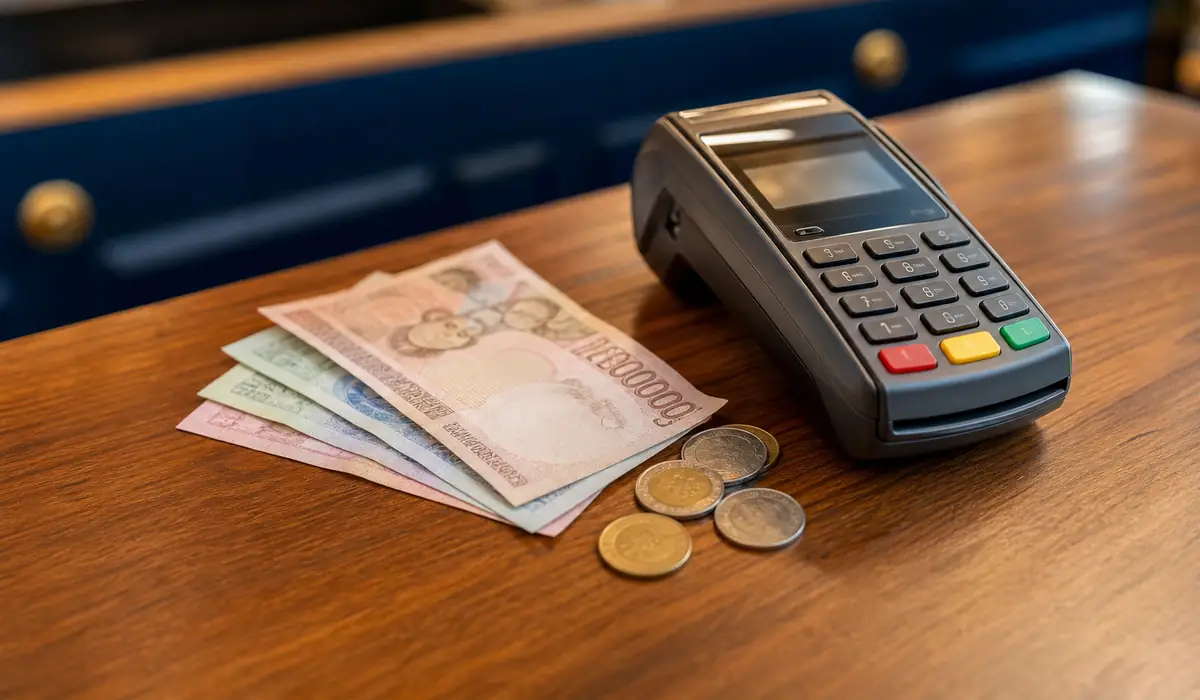
Cash is the safe answer — Thai baht or the equivalent in another currency. The official reminder also mentions documents that show payment of an equivalent amount. Bank-app balances, credit-card limits and screenshots are not named in the official guidance. If you're relying on them, you're relying on the officer's goodwill.
How much is 20,000 baht in your money?
Very roughly: US$550–620, €500–570, or £430–490, depending on the day's rate. You don't need to carry baht specifically — the equivalent in dollars, euros, pounds or another major currency satisfies the requirement, and you can change or spend it during the trip. It's money you'd likely spend anyway, carried up front.
Families and children
The family threshold is 40,000 baht regardless of size — two parents with three kids need 40,000, not 100,000. "Family" means traveling together as one household; two friends are two individuals at 20,000 each. Carry it split between adults rather than all in one wallet. TAT says the requirement does not apply to children under 12.
If you can't show funds
The officer can refuse entry — that's the legal weight of the rule — but in practice a failed spot check more often leads to extra questions about your ticket, accommodation and plans. Polite, consistent answers plus a return ticket and confirmed hotel resolve most situations. Arguing that "nobody ever checks this" does not.
Practical setup that works
Withdraw or exchange before departure — the checkpoint comes before the arrival-hall ATMs at some airports, and you don't want to test which layout your terminal has. Keep the cash in your carry-on, split between family members. Amounts of more than US$15,000 (or equivalent) must be declared to Thai customs, but a tourist carrying 20,000 baht equivalent is nowhere near that line.
The thresholds, by how you enter
The number depends on the door you come through, and most articles quote only one of them.
| Entry type | Per person | Per family |
|---|---|---|
| Visa exemption | 20,000 baht | 40,000 baht |
| Visa on Arrival | 10,000 baht | 20,000 baht |
| Transit visa | 10,000 baht | 20,000 baht |
The family figure is a cap, not a multiplier: two parents and three children entering visa-exempt need 40,000 baht between them, not 100,000. "Family" means travelling together as one household — two friends are two individuals at 20,000 each.
What is actually accepted, ranked by how well it works
| Form | How it goes |
|---|---|
| Thai baht in cash | Always accepted; this is what the rule contemplates |
| Major foreign currency in cash | Accepted; officers convert at a glance |
| A recent printed bank statement | Sometimes accepted, at discretion |
| A banking app balance on your phone | Not named in the official guidance; up to the officer |
| A credit card and its limit | Not named in the official guidance; do not rely on it |
| A screenshot of any of the above | Not named in the official guidance; weak evidence |
The honest summary: cash is the only answer that never needs the officer's goodwill. Everything below it works some of the time, with the person in front of you, on the day.
That is not a claim that you will be asked. Most tourists are not. It is a claim about what happens when you are.
Who gets asked
Checks are discretionary and concentrate on a recognisable set of arrivals. You are more likely to be asked if you have:
- A one-way ticket with no onward booking.
- A long stay relative to the permission you are being granted.
- Frequent visa-exempt entries across recent months — the shape of living in Thailand rather than visiting it.
- Vague answers about where you are staying, especially if they do not match your arrival card.
- A prior overstay on your record.
A first-time visitor with a return flight and a hotel booking is a rare target. Rare is not never, which is why the preparation costs so little relative to what it insures against.
How to carry it without carrying too much
Exchange or withdraw before you fly, and see how to get baht without losing money on it. At some terminals the immigration checkpoint comes before the arrival-hall ATMs, and you do not want to discover which layout your airport has while being asked to show funds.
Split it between adults. All the family's money in one wallet is both a security problem and an awkward answer if the adults are processed separately.
Do not carry more than you need for the rule. Amounts of more than US$15,000 must be declared to Thai customs. Twenty thousand baht is nowhere near that line, and there is no reason to go anywhere near it.
Remember it is not a fee. Nobody takes this money. It is evidence, shown once and then spent on your own holiday.
Roughly what 20,000 baht is in your currency
| Currency | Approximate |
|---|---|
| US dollars | $550 to $620 |
| Euros | €500 to €570 |
| Pounds sterling | £430 to £490 |
Rates move, so treat these as the size of the thing rather than a target. You do not need baht specifically — the equivalent in any major currency satisfies it, and can be changed or spent afterwards.
If you are asked and cannot show it
The rule's legal weight is that entry may be refused. In practice a failed spot check usually escalates rather than terminating:
- More questions, about your ticket, your accommodation and your plans.
- A check of your documents against the answers — this is where a return ticket and a confirmed booking do most of the work.
- Secondary inspection, if the answers do not settle it. A room, a wait, more questions. Not an arrest, and usually not a refusal.
What helps: consistency, politeness, and documents that agree with each other and with your arrival card. What does not help: explaining that this rule is never enforced, which the officer standing in front of you is currently disproving.
This check is part of a broader 2026 tightening — see how the new 30-day visa-free rules change what immigration looks for.
Sources checked
- Tourism Authority of Thailand: proof-of-funds reminder (6 July 2026) · October 28, 2026
- Royal Thai Embassy Washington: 30-day visa exemption and extension · October 28, 2026
- Royal Thai Embassy Brussels: Visa on Arrival requirements · October 28, 2026
- Ministry of Foreign Affairs: transit visa requirements · October 28, 2026
- Civil Aviation Authority of Thailand: AIP GEN 1.3 (currency declaration and customs rules) · October 28, 2026